
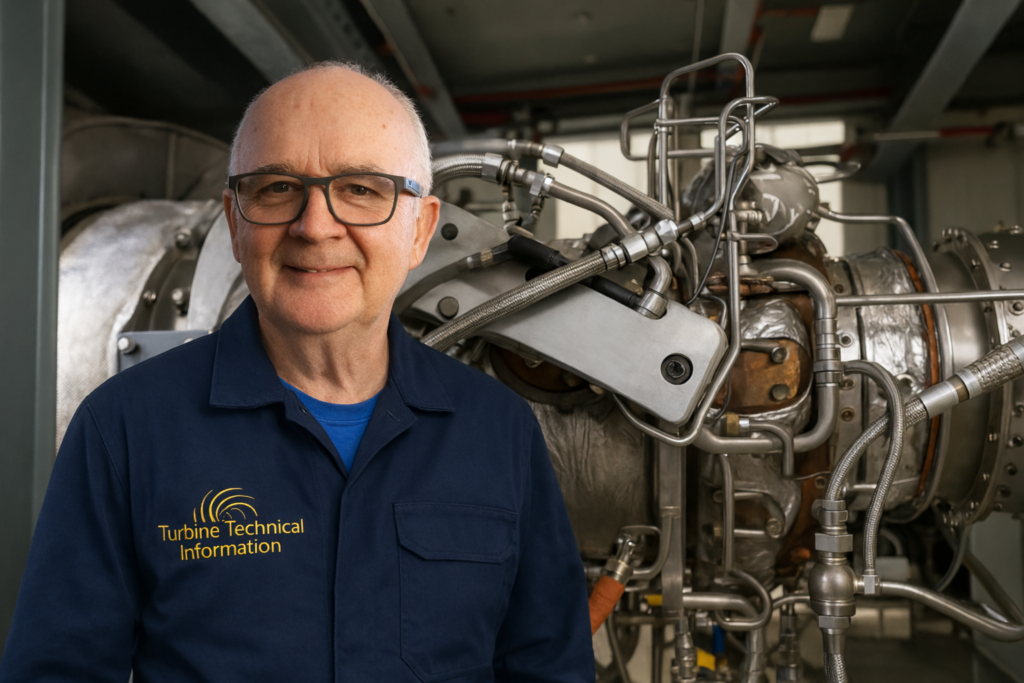
Hi Don Murphy here and you are very welcome. Below you have a detailed description of the training on the Bently Nevada 3500 System testing.
If you have any questions or you need to contact me for any reason use the following: – WhatsApp +54 911 5423 0311 or by email don_murphy_5411@yahoo.com or don-murphy@dmba5411.com
Bently Nevada 3500 testing - FT8
Collect credit card payments
The cost of this training is 25 Euro. This will give you access to the training video for three months. See below for more details on Terms and Conditions.
Bently Nevada 3500 Vibration System Testing on the Pratt & Whitney FT8
A Practical, Field-Proven Verification Procedure Using a Simple Frequency Generator
This 26-minute technical training video provides a clear, practical, and repeatable method for verifying the complete Bently Nevada 3500 vibration protection system installed on the Pratt & Whitney FT8 gas turbine. The focus is not theory, but how to actually test the system in the field—from the field wiring and termination boards, through the 3500 cards, to the alarms, shutdowns, and relay outputs.
Unlike many vibration courses that assume expensive test equipment or factory support, this training demonstrates how the entire verification can be performed using a low-cost FG-100 frequency generator (typically available online for under USD $50), combined with a calibrated multimeter. The result is a procedure that is accessible, repeatable, and suitable for commissioning, troubleshooting, and periodic verification.
By the end of this training, you will be able to confidently verify not only the FT8 Bently Nevada 3500 system, but any Bently Nevada vibration system using the same fundamental approach.
What This Course Covers
This training walks step-by-step through a complete vibration system verification, including both displacement and velocity-based channels used on the FT8. You are shown exactly where to inject signals, how to set up the frequency generator, how to verify the signal electrically, and how to confirm the system response inside the 3500.
Key topics include:
Understanding the FT8 Bently Nevada 3500 system architecture
Identifying field termination boards, D-25 connectors, and multi-signal cables
Mapping vibration channels from the field wiring to the correct 3500 card and slot
Correct signal injection points for generator and turbine vibration channels
Verification of alarms, shutdowns, and 86E relay operation
Practical Signal Injection Using the FG-100
A major strength of this course is the practical use of a simple frequency generator. Rather than relying on specialized Bently Nevada tools, the course demonstrates how the FG-100 can be used to simulate vibration signals accurately and safely.
You will learn how to:
Configure the FG-100 for vibration signal simulation
Apply the correct DC offset required by Bently Nevada proximity and velocity systems
Set frequency and amplitude precisely using the generator and a multimeter
Verify frequency, DC voltage, and AC amplitude independently
Avoid common mistakes that lead to false alarms or failed tests
The course explains why each setting matters, not just which buttons to press.
Generator Displacement Probe Testing
The training begins with displacement probe simulation for the generator channels. You will see how to:
Inject a simulated non-contact probe signal
Apply the correct −9.5 VDC offset
Convert mils of vibration into millivolts
Understand RMS versus peak and peak-to-peak measurements
Verify alarm and shutdown setpoints correctly
This section removes much of the confusion around vibration units and measurement methods that commonly cause errors during testing.
Turbine Velocity Transducer Testing (Flanges A, K, & S)
The course then moves into velocity-based vibration channels using Bently Nevada 330750 high-temperature velocity transducers. These channels are often misunderstood because the alarms are displayed in displacement units even though the transducer output is velocity.
You will learn:
How integrated accelerometer/velocity transducers work
How frequency affects vibration amplitude calculations
How to convert displacement (mils) into velocity (in/sec or mm/sec)
How to calculate the correct millivolt levels for alarms and shutdowns
Why frequency selection is critical when simulating vibration
Clear worked examples are shown so you can reproduce the calculations in the field.
Special FT8 Vibration Channels
The course also covers the less obvious vibration-related channels on the FT8, including:
Collector Box Alignment
Water Injection vibration monitoring
These channels use filtered signals and shared transducers, and the training explains:
How the signals are derived
Which frequencies must be injected
How to calculate alarm amplitudes
Why time delays (such as the 30-minute alarm delay) must be considered
Differences between pre- and post-Service Bulletin 13M04 settings
This is information that is rarely documented clearly and often learned only through experience.
Interface Cable Design
To simplify testing and reduce risk, the course includes detailed guidance on building a custom D25 to BNC interface cable. This cable allows clean signal injection without disturbing permanent wiring.
You will see:
Exact pin-to-pin wiring for all four channels
Correct signal and common polarity
Practical wiring tips to avoid loose connections
How to add test leads for multimeter verification
This alone can save hours during commissioning or troubleshooting.
Who This Course Is For
This training is ideal for:
Commissioning engineers
Maintenance technicians
Instrumentation and control engineers
Field service engineers
Operators responsible for vibration system integrity
If you are responsible for verifying that an FT8 vibration system will protect the turbine when it matters most, this course gives you a proven, field-tested method to do exactly that.
What You Will Walk Away With
After completing this course, you will be able to:
Confidently test and verify a Bently Nevada 3500 system
Perform vibration verification without expensive test equipment
Understand the why behind vibration alarm settings
Diagnose wiring, card, or logic issues systematically
Apply the same methodology to other Bently Nevada installations
Terms & Conditions
Once payment has been processed I will set-up your access to the training material.
You will have access to the training video for three months from the date of purchase.
There will be a technical document accompanying the training video which will give you the technical content of the video for reference.
This training is for personal use only and can’t be shared or used by purchaser for commercial use.
The video will be hosted by Vimeo which gives high quality viewing.
The video is not to be downloaded from the Vimeo hosting site.
Thanks.